

The Art of Understanding What's Going On
The survivors will be those who've meticulously deciphered the underlying mechanics, exploiting subtler truths while others chased fleeting illusions.
A student asked master Joshu, "What is Buddha?"
Joshu answered, "Three pounds of flax."
The student was enlightened.
The merchant who overheard this doubled his flax prices.
I was having coffee with a founder last week when he started talking about AI-enabled services business roll-ups. His eyes lit up as he described the opportunity, wishing he could pivot from what he was working on to pursue this opportunity. High-profile fundraises, influx of capital, and the chance to consolidate fragmented service industries using AI.
I asked him to walk me through where exactly AI fits into the strategy. As we dug deeper, it became clear that AI wasn't meaningfully changing the capital structure or unit economics of these businesses. The main argument was the meaningful reduction of operating costs. The success of roll-up companies has never been solely about software; it's about access to talent, capital, and the will to underwrite acquisitions more effectively than their competitors.
My friend, the founder, spoke without irony or guile; belief, after all, is an insidious comfort. AI had become his talisman, a glittering promise to guard against the terrors of irrelevance. But the system rewarded AI narratives over the more mundane realities of debt capacity, integration capabilities, and operational excellence.
We inhabit a moment when the letters ‘AI’ shimmer with almost mystical power, conjuring illusions that obscure the machinery grinding quietly beneath. Like all magical incantations before it, the phrase 'artificial intelligence' hides more than it reveals. Investors whisper it with a mixture of awe and greed; founders chant it like a secular prayer. Yet the machine itself remains unchanged. This, more than any other secret, is what the market fervently hopes we do not notice.
Byrne Hobart's newsletter, The Diff, captivates finance and tech readers precisely because he pierces illusions, clarifying markets and systems with ruthless clarity.
For example, he could be writing about the American college admissions. But, really, he’s writing about the underlying mechanism of elite-selection systems—how institutions compress talent signals, outsource vetting hierarchically, and inevitably face gaming as paths become more legible. Or when he writes about Archegos, he explains how concentrated leverage internalizes risk, which could lead to significant failures for a limited number of participants while averting broader systemic harm.
Whether he names it or not, Hobart practices Systemantics, the discipline of noticing what a system really optimizes for.
And the one simple goal of any student of Systemantics is to answer the question: what’s really going on here?
Three axioms of Systemanics

In 1975, John Gall published Systemantics: The Systems Bible, a book that should be required reading for anyone looking to build or understand systems. Gall identified dozens of axioms throughout the entire book, many of which are hilariously simple. I found these three fundamental truths to be most relevant:
THE NAME IS MOST EMPHATICALLY NOT THE THING.
Labels set expectations reality rarely satisfies. Say "restaurant," and visions of cuisine appear; say "venture capital," and money springs to mind. Both mislead subtly and profoundly.
PEOPLE IN SYSTEMS DO NOT DO WHAT THE SYSTEM SAYS THEY ARE DOING.
University professors chase grants, not student enlightenment. VCs nurture personal brands alongside deals. Startup founders optimize funding metrics over customer needs.
THE SYSTEM ITSELF DOES NOT DO WHAT IT SAYS IT IS DOING.
The restaurant business is actually the alcohol business. The printer business is the ink cartridge business. Reasoning models may not be reasoning.
These laws may sound like cynical observations, but they're operational realities. Systems evolve toward what sustains them, not what their names suggest they should do.
The pattern everywhere
Once this pattern reveals itself, it manifests everywhere.
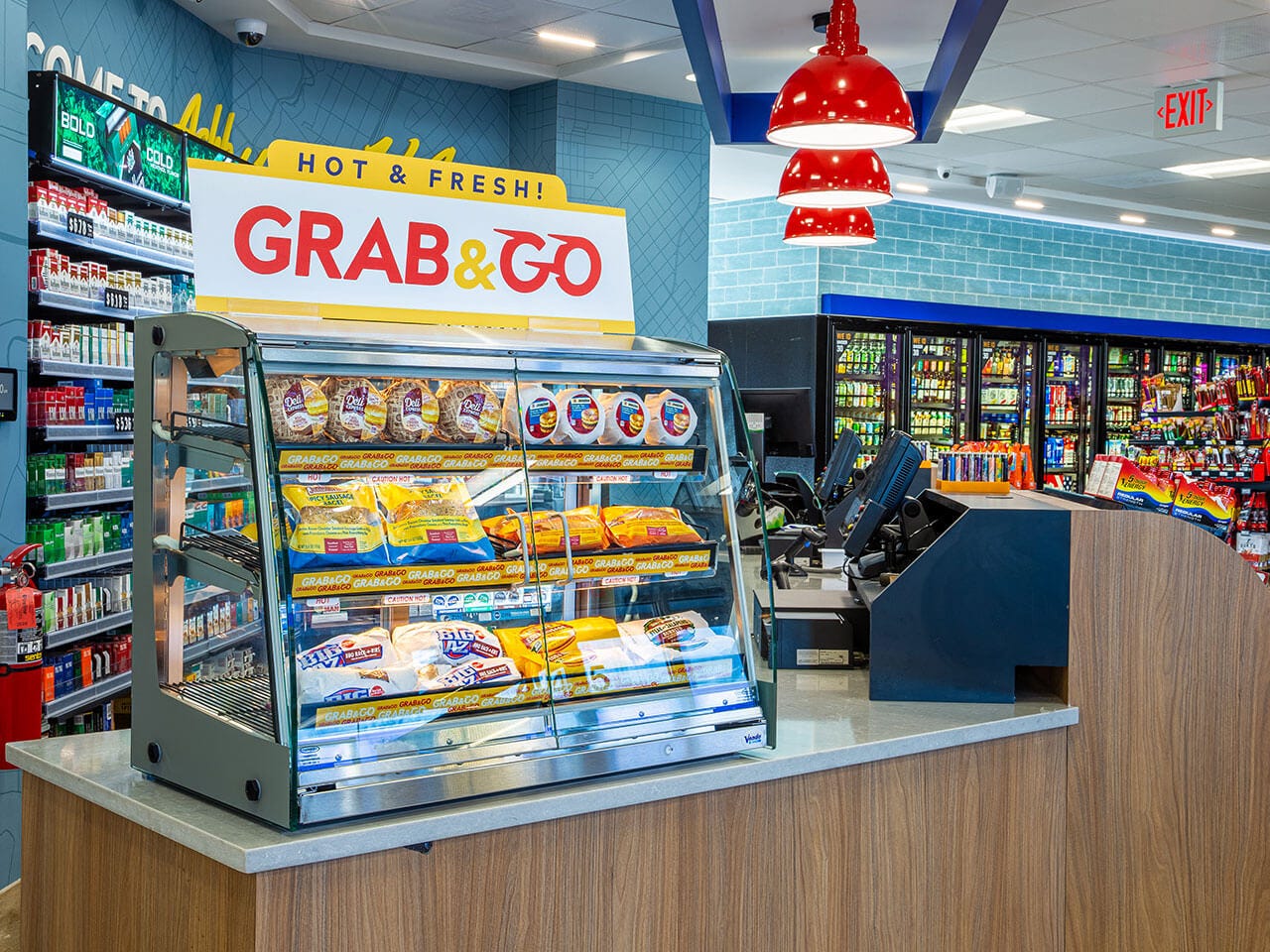
Gas stations masquerade as fuel vendors while their true profits flow from overpriced snacks. Gyms sell the dream of transformation while banking on the reality of abandonment. Restaurants stage elaborate culinary theater while their margins depend on the markup of wine and cocktails.
The most successful enterprises often generate their wealth from sources barely whispered in their marketing materials.
DoorDash is a food delivery platform. It's an advertising network that happens to deliver food. Restaurants pay commission fees, but increasingly they pay for promoted placement, sponsored listings, and customer acquisition tools. The delivery infrastructure creates the audience; the advertising products generate the margins.
Nordstrom is luxury retail, but Visa logos, not cashmere scarves, keep the lights burning. Apparel operates on razor-thin margins while shouldering the full weight of inventory risk. The co-branded credit cards, by contrast, float on contribution margins of 70-80%, require no warehouses, and generate cash even when foot traffic evaporates.
Robinhood provides commission-free trades for retail investors. The real business is selling order flow to high-frequency trading firms and earning interest on consumer cash deposits. Free trades attracted users; payment for order flow generated revenue.
Understanding Systemantics for companies explains much of what feels so strange and uncanny at the peak of technology hype cycles: dramatic claims obscure subtler economic truths. New technologies usually slot into existing value-capture mechanisms, reshaping them incrementally rather than wholesale.

Spotting the gap between surface narratives and hidden incentives helps clarify how these cycles play out and reveals the second- and third-order effects that are often overlooked when abstracting "AI" as a universal fix.
However, the joke of “adding AI to your deck” and immediately increasing your valuation by 10x is valid for a reason. The incentives created by both the demand side (capital) and supply side (startups) of the venture marketplace mean that the music chair will continue until something breaks.
As a founder or an investor, times like these present unique opportunities to win by seeing clearly.
Why Request for Startups fails
Systemantics explains why top-down ecosystem initiatives rarely produce breakthrough companies.

When YC publishes a Request for Startups, the name of the quest pre‑compresses the solution space, proof that even Silicon Valley’s idea factory cannot escape Gall’s first axiom.
Naming a desired outcome creates a frame that constrains thinking. When you ask for "a better way to manage healthcare data with AI," you get solutions that fit that frame. You don't get unexpected breakthroughs that redefine the problem entirely.
The most transformative companies rarely emerge from someone else's problem statement. They come from founders who see opportunities that others miss, often in areas that lack established categories.
Facebook didn't fulfill a request for "improved college social networking." It emerged from Mark Zuckerberg's specific intuition about how Harvard students wanted to connect.
Google didn't answer a call for "enhanced web search." It began with Larry Page and Sergey Brin's novel approach to ranking information. Their recognition of the gap between what search engines claimed to deliver (relevant results) and what they actually provided (keyword matching with minimal quality control).
Follow the money

To pierce illusions, trace where profits actually pool, quietly beneath loud proclamations. Follow incentives down entire value chains—where does money accumulate when stripped of narrative? Notice what people genuinely spend their days pursuing, despite their titles. Observe closely where the whispered truths of operations diverge from shouted marketing slogans.

The cloud giants call their AI services "innovation platforms," and they are. But more importantly, they're customer acquisition engines.
Amazon's Bedrock makes AI accessible by design while capturing enterprise workloads by structure. Companies that adopt AI through Bedrock naturally consolidate their data, compute, and billing within Amazon's ecosystem.
Microsoft's $13 billion OpenAI investment delivers both genuine AI capabilities and customer flow. Every ChatGPT query runs on Azure, and every enterprise seeking GPT integration enters Microsoft's gravitational field.

Scale AI claims to democratize machine learning, but underneath the algorithmic rhetoric, it operates a sophisticated staffing agency. Human annotators earn $4-8 per hour labeling data that Scale sells for up-to $100 per image labeld. Scale monetizes per task, marking up the cost of labor giving the company 50%+ gross margin."
Not every system has a gap between its stated and actual purpose. Many AI applications, such as coding agents, generative media, and reasoning models, truly deliver on their promises of increased productivity, new content creation, and quality control.
The key takeaway is that genuine technological advancement, which is real and accelerating, must be distinguished from the business models built around it, which frequently adhere to age-old patterns. When stated purpose and actual function align, it typically indicates that the technology addresses a specific, measurable problem with clear economic value, rather than promising to "transform everything."
The art of understanding what’s going on
Systemantics, or, the art of understanding what’s going on, means recognizing the persistent gaps between what systems proclaim and what they actually do, and capitalizing on that insight.
When the fog dissipates and clarity emerges, the survivors will be those who patiently deciphered the underlying mechanics amidst fleeting illusions.
Enduring AI companies will emerge in two distinct spaces by 2035: unglamorous but essential tools that demonstrably improve margins or reduce costs, and genuine frontier research that reveals entirely new problem spaces. The first category refines what exists; the second invents what doesn't yet.
Real opportunities lie in the quiet spaces between stated ambitions and operational truths. Just as they always have.